Source: Nine Islands Media
When Maeverlyn Pitanoe survived a deadly bomb explosion in Honiara, she believed the horror of what happened would force change.
The 2021 Mother’s Day blast killed two young men, Charles Noda and Raziv Hilly, and left Maeverlyn with serious injuries that saw her hospitalised for more than 50 days.
It seemed obvious to her the tragedy would be a turning point.
Surely, she thought, the thousands of unexploded World War II bombs still scattered across Solomon Islands would finally be treated as an urgent national crisis.
Surely, no one would allow this to happen again.
But years later, Maeverlyn has had to come to terms with another painful reality: change will not come simply because the suffering is obvious.
It will take advocacy, public pressure, political will, and a much wider understanding of what Solomon Islanders are still living with more than 80 years after the war ended.
“When the explosion happened, I thought it would be impossible for people to ignore,” Maeverlyn says.
“Two lives were lost, I was badly injured, and many families were left carrying the pain.
“I believed something would change quickly, because no family should have to go through that again.”
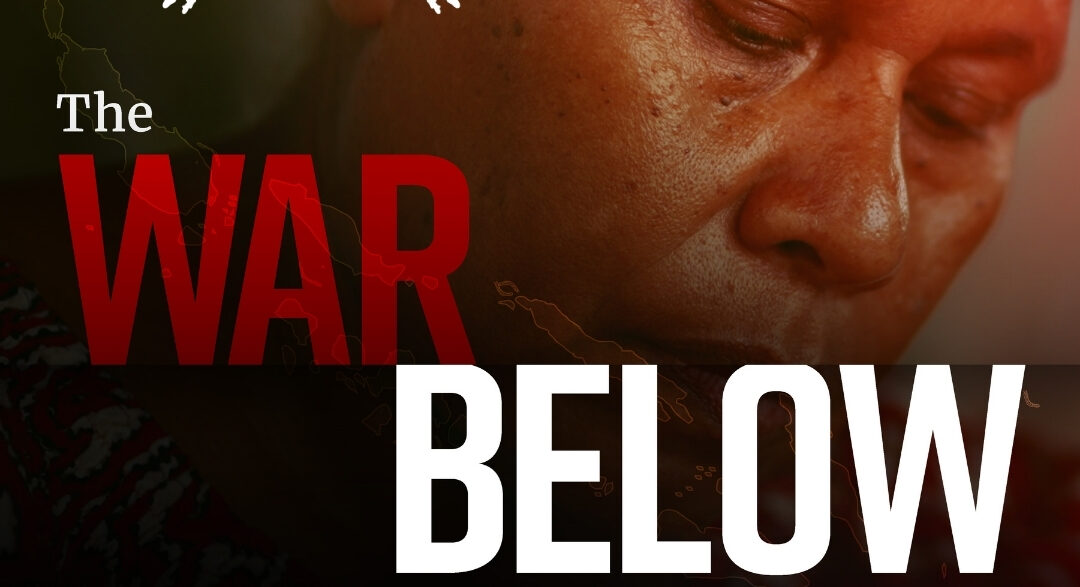
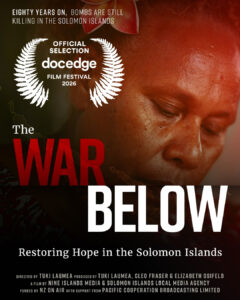
Maeverlyn is one of the survivors featured in The War Below: Restoring Hope in the Solomon Islands, a new Solomon Islands-Aotearoa New Zealand documentary making its New Zealand premiere at the Doc Edge film festival in June and July.
The film examines the ongoing impact of unexploded ordnance, or UXOs, left behind after World War II.
During the war, Solomon Islands became a major battleground between Allied and Japanese forces, leaving behind bombs, shells and other explosives that were never safely cleared.
More than 80 years after the war ended, bombs are still being found near homes, schools, gardens and community spaces across Solomon Islands, putting families at risk in everyday life.
The power of storytelling
During the making of The War Below, Maeverlyn founded Bomb Free Solomon Islands, a survivor-led organisation advocating for public awareness, survivor support and the safe removal of unexploded ordnance.
She says the film helped her see the power of survivors telling their own stories.
“During the filming of The War Below, I began to understand that telling our stories could be part of the change,” Maeverlyn says.
“That is why Bomb Free Solomon Islands was founded – to make sure survivors are heard, families are supported, and our communities are not left alone with this danger.”
Her story is part of the wider human cost shown in the documentary.
The film also features Lorettalyn Ale, who survived an explosion in Upper Betikama, Guadalcanal, which killed her husband and young son, while her other son Jeffry Manigoli survived the blast, sustaining life-threatening injuries.
Together, their stories show how the legacy of war is still being carried by Solomon Islands families today.
“For me, this film is not just about what happened to me,” Maeverlyn says.
“It is about all the people in Solomon Islands who are still living with bombs under their homes, near their gardens, beside schools and in places where children play.”
“World War II ended more than 80 years ago, but for many Solomon Islanders the danger is still here.
“We did not create this problem, but our people are still paying the price.”
Successful co-production
The War Below was filmed entirely in Solomon Islands by an all-Pacific crew and is a co-production between Solomon Islands Local Media Agency and Aotearoa New Zealand-based Nine Islands Media.
It was directed by BAFTA-nominated Sāmoan filmmaker Tuki Laumea, with producers Elizabeth Osifelo, Tuki Laumea and Cleo Fraser.
The film was funded by NZ On Air through the Aotearoa New Zealand Pacific Regional Media Fund, in collaboration with Pacific Cooperation Broadcasting Limited (Pasifika TV), which is funded by the New Zealand Ministry of Foreign Affairs and Trade.
The fund supports co-productions between New Zealand-based Pasifika producers and Pacific-based broadcasters, helping Pacific stories be made in partnership with Pacific communities and media organisations.
For The War Below, that meant production teams from Solomon Islands and Aotearoa working together on the ground, sharing technical and editorial skills during filming.
The Solomon Islands production team included assistant directors Dorothy Wickham and Jeremy Gwao, camera assistant Bradford Noda, and other local media professionals who helped bring the story to screen.
The idea for the documentary came from co-producer Elizabeth Osifelo, drawing on her reporting on UXOs in Solomon Islands through Tavuli News, which she co-owns.
“We want to know, whose mess is this? Whose war was it and who pays the price? Telling this story…is important because survivors and victims’ need support,” Elizabeth says.
“Solomon Islands has tragically lost lives of loved ones, and we will continue to do so…it is important because we need more support.”
Elizabeth adds the documentary drives empathy for survivors, and also the push for responsible authorities to step up and provide the help needed throughout Solomon Islands.
“Above all, what we have come to learn is a lot needs to be done, and it’s just a matter of time before someone loses another loved one.”
The film’s original score was also created through a Pacific collaboration, with Solomon Islands musicians from Dreamcast, led by James Kauhiona, working alongside Aotearoa-based composer Anonymouz (Faiumu Matthew Salapu).
Tuki says it was important that the film was made with Solomon Islanders, not simply about them.
“This is a story about survival, but it is also about responsibility,” Tuki says.
“The people in this film are not statistics. They are mothers, children, families and community leaders who are living with the consequences of a war they did not start.”
“From the beginning, we knew this film had to be grounded in Solomon Islands voices.
“The story belongs to the survivors and communities who live with this danger every day.”
A community screening of The War Below was held in Honiara last year, ensuring Solomon Islanders saw the film before wider distribution across the Pacific, Aotearoa and globally.
The community screening was supported by Pasifika TV, the New Zealand High Commission to the Solomon Islands, Solomon Airlines, King Solomon Hotel and Nine Islands Media.
Since then, Nine Islands Media and Bomb Free Solomon Islands have continued working together to use the film as a tool for awareness, advocacy and survivor-led action.
Through screenings, media coverage, public messaging and outreach to regional and international partners, the aim is to help people understand that unexploded bombs in Solomon Islands are not only a legacy of World War II, but a current humanitarian issue affecting families, children and communities now.
The impact work is focused on building support for survivors, strengthening public awareness, encouraging community education, and helping connect Solomon Islands with technical, humanitarian and diplomatic pathways that could support long-term action.
That includes encouraging Solomon Islands officials to understand the benefits of engaging with the Convention on Cluster Munitions process, including opportunities for victim assistance, risk education, clearance cooperation and international partnerships.
Work is also being carried out to encourage other nations to engage with the Solomon Islands on the issue, and look at what support can be provided.
The film has since won the Prix Demain award at FIFO Tahiti 2026 and was a finalist for Best Documentary Single at the Australian International Documentary Festival.
Maeverlyn hopes the documentary will help build support not only for survivors, but for long-term action to remove the danger from Solomon Islands communities.
“Bomb Free Solomon Islands began from survival, but it is now about hope,” she says.
“It is about protecting the next generation so our children do not have to live with the same fear.”
The War Below: Restoring Hope in the Solomon Islands screens at Doc Edge in Auckland on June 28 and July 10 and in Wellington on July 21.
Q&As will be held with the New Zealand based filmmakers and the Solomon Islands community at the screenings.
Visit DocEdge for tickets.
Donations can be made to Bomb Free Solomon Islands directly via Givealittle.
*If you want to request filmmakers to attend Q&As or inquiry about global screenings email: info@nineislandsmedia.co.nz.