

Drawn in by either religion, connection or a sense of belonging, the great state of Utah has become a mecca for Pasifika from around the region, boasting vibrant communities throughout the United States.
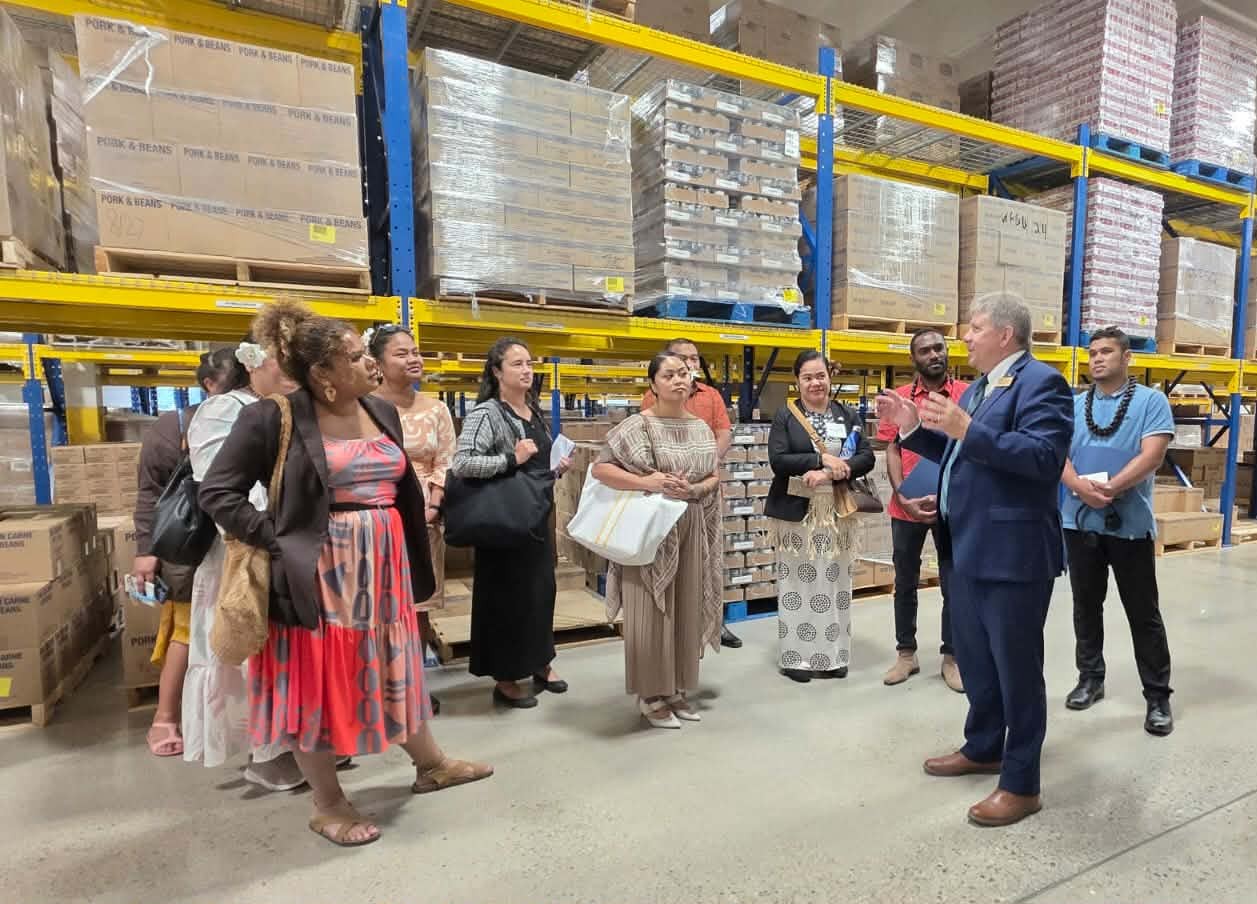
A group of 12 Young Pacific Leaders (YPL) alumni visited the Utah capital Salt Lake City as part of a recent US Alumni Roadshow, to meet with the Pacific diaspora – many of whom moved to Utah due it their affiliation with the Church of Jesus Christ of the Latter-day Saints (LDS).
With the US Government’s signature YPL initiative designed to strengthen leadership and networking in the Pacific, the Alumni Roadshow was an opportunity to bolster connections and relationships between the US and other Pacific countries.
The YPL alumni connected with LDS leader Mark Wiest, to talanoa about the church’s significant humanitarian and administrative operations in the Pacific and beyond.
A missionary for Church Hosting for LDS in Salt Lake City, Mark says in 2024, LDS provided $1.5 billion in assistance worldwide through humanitarian aid and disaster relief, welfare, financial aid, and job training.
“Collaboration is key,” Mark says of the church’s successful business operations.
“We collaborate not only with global partners but also with local communities, and we have 80,000 missionaries who volunteer their time around the world, including throughout the Pacific Rim,” Mark explains.
The church has a long history with the Pacific and its peoples, with the LDS first arriving in the 1840s and establishing a significant presence in the region.
Mark says each congregation has someone called to assist people in their area and work with local organizations to form partnerships.
“Our area presidency in the Pacific helps coordinate these efforts, especially during times of disaster or need.
“We love working with trusted organizations everywhere and I encourage anyone to reach out to a local member — collaboration is how we live out our belief in loving God and loving our fellow human beings.”
The YPL alumni also visited humanitarian centers operated by LDS, including Welfare Square and Deseret Industries, in Salt Lake City.
“We showed them our production facilities — where we produce bread, dairy, and canned goods — as well as Bishop’s Storehouse, which provides food assistance to those in need, whether or not they are members of our faith,” Mark says.
“We collaborate with local food banks, and the food we produce goes both domestically and internationally and we work with trusted organizations like the World Food Program and the Red Cross.”
Mark explains the food assistance is funded through what LDS calls fast offerings, where each church member fasts for two meals once a month and donates those funds to help those in need.
“This is separate from tithing – humanitarian work is entirely supported by those offerings.”
Half of the food distributed is produced by LDS, while half is purchased, Mark adds.
“Around 60 percent of it goes to people who are not members of the LDS faith.
“We truly believe in the commandment to love your neighbor — to love God and love one another.”
Business savvy
The LDS Church has historically engaged in business to provide for its members and generate revenue to support its mission – including a wide range of for-profit ventures, from agriculture and real estate to media and finance.
One such business, is KSL-TV, affiliated with NBC, located in Salt Lake City, and property of Bonneville International, the for-profit broadcasting arm of LDS, and sister to radio stations KSL and KSL-FM.
Of Samoan heritage, and Utah-raised, Tamara Vaifanua is an anchor and reporter for KSL-TV, making her the first Samoan to hold the role in her home state.
The YPL alumni met with Tamara, who took time out from her busy schedule to describe working and living among the Pacific diaspora of Utah.
“I grew up here in Utah—both of my parents are Samoan, but they raised us here, so it’s a privilege to be able to serve the communities of Utah,” Tamara says.
She adds her journey to where she is now, is by default.
“I attended college and took an Introduction to TV 101 class, and I just fell in love with the idea of telling stories and putting all the pieces together,” Tamara explains.
“I worked in other markets along the West Coast, but Utah is home – I wanted to report on stories that matter most to my Pacific Islander community, which is growing here in Utah.”
Tamara says there is a real hunger to hear stories about the Pacific community, and by Pacific.
“We often hear about Pacific Islanders in the context of sports—we know they’re incredibly talented athletes.
“Here in Utah, not only do we have talented athletes, but we also have Pacific Islanders in all facets of life—government, education, business ownership, and more.
“For me, it’s important to share their stories—issues that matter most, like healthcare, housing, and affordability – those aren’t unique to Utah, but within our Pacific Islander communities, they carry unique challenges.
“We have large families, and many of us support relatives overseas.
“I really try to seek out stories that reflect those realities.”
As a Pacific person living in the US, it can sometimes feel as if what is happening back home in the islands, is very far away, Tamara says.
“Many of us were born here, but our elders and extended families are back in the islands – we want to stay connected to those stories and to our heritage,” she says.
“We’re bound by ancestry, voyaging, and storytelling—it’s in our DNA.
“I think it’s crucial, especially for the younger generation growing up here, to stay connected and I don’t want to see that fade away.”
“The relationship between the Pacific and the US can and should work hand in hand, and that exchange is vital.”
Visit the Young Pacific Leaders website for more details on the US Department of State initiative.