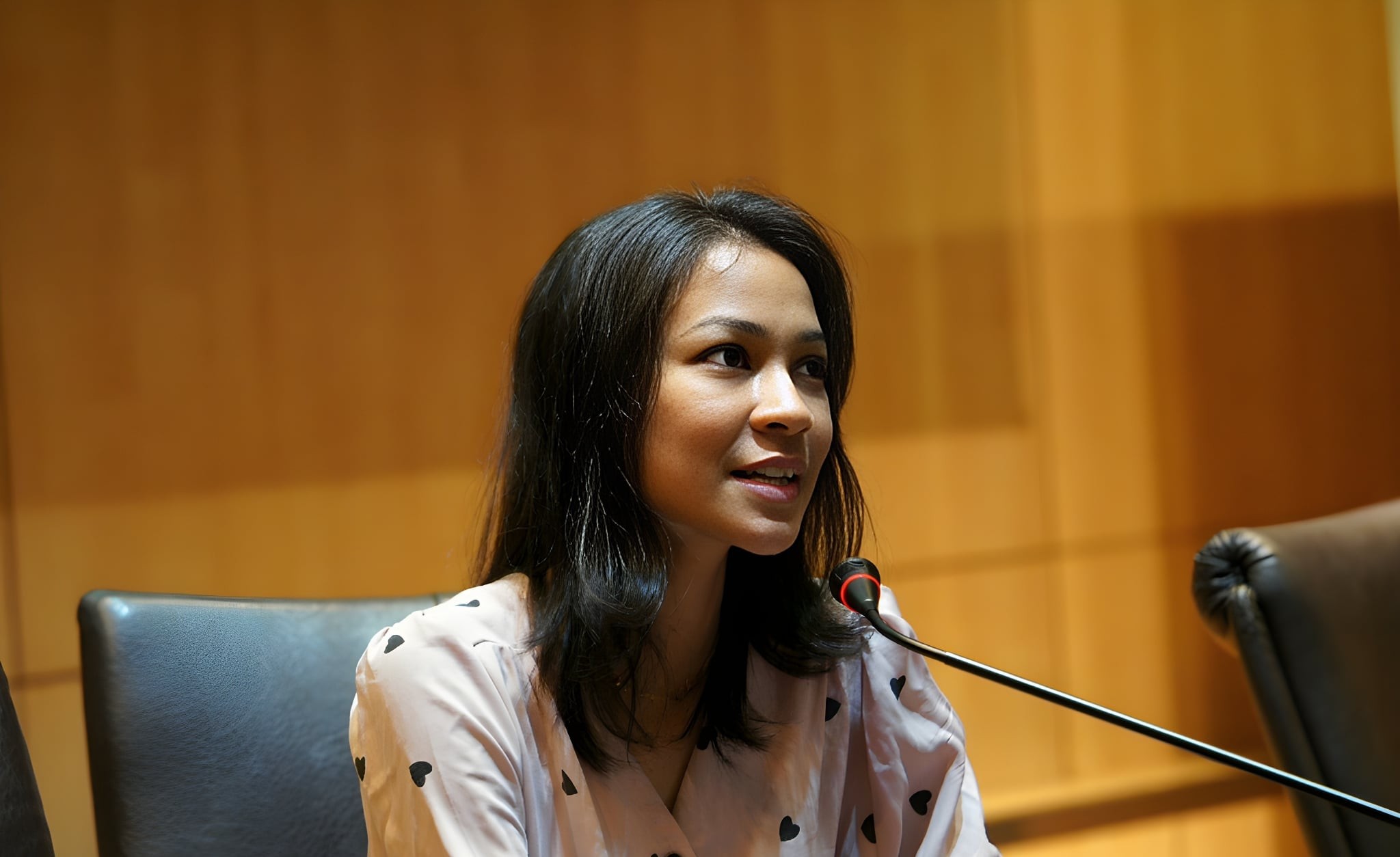

Intentional about ethics and representation, Suva-based communications specialist Kreetika Kumar approaches storytelling with purpose.
“I focus on aligning narrative with institutional responsibility: ensuring that stories do not simply evoke empathy, but also clarify decision-making processes, power dynamics, and outcomes,” Kreetika says.
The current communications lead at the Foreign, Commonwealth and Development Office (FCDO) at the British High Commission in Suva, Fiji, Kreetika holds a master’s degree in international relations and diplomacy and has participated in fellowships focussed on leadership, development reporting and public engagement.
She says her work sits between policy, media, and communities, translating complex issues into narratives that are accurate, accessible, and grounded in lived realities.
“I use storytelling as a strategic tool for accountability, influence, and public understanding, rather than as an end in itself,” she adds.
Most recently, Kreetika has been selected as one of 30 Young Pacific Leaders (YPL) from 20 Pacific nations, to embark on a journey, highlighting the power of Pacific storytelling through digital media.
From March 10-13, 2026, the United States Department of State and Pacific Cooperation Broadcasting Limited (PCBL) will co-host the YPL Navigating the digital landscape workshop, with a focus on truth, transparency, and technology in Tāmaki Makaurau Auckland, Aotearoa New Zealand.
The emerging Pacific leader hopes to strengthen her digital storytelling practice at the workshop, without compromising depth, accuracy, or ethics.
“I’m particularly interested in learning how others are navigating the same constraints I face such as communicating complex policy issues in digital spaces that prioritizes speed, emotion, and simplicity,” Kreetika says.
“I want to refine practical strategies for maintaining narrative coherence across platforms, ensuring that short-form digital content still aligns with longer-term communication goals and institutional accountability.
“This includes learning how to design stories that build understanding over time, rather than reacting to each news cycle in isolation.
“Equally important is the opportunity for regional exchange and critical reflection.”
The digital landscape fundamentally shapes Kreetika’s approach to storytelling as a communications lead, particularly in terms of pace, accountability, and audience expectation.
“Digital channels have expanded reach and accessibility, allowing institutional narratives to move beyond traditional gatekeepers and engage directly with communities and regional audiences,” she says.
“At the same time, they have compressed attention spans and incentivized oversimplification.
“As a result, my storytelling has become more modular: complex issues are broken into connected narratives across formats, without losing the underlying policy logic.”
The digital landscape forces a more disciplined approach to storytelling – where credibility is built through sustained engagement rather than one-off messages, and where communication is measured not by visibility alone, but by understanding and trust, she says.
Engaging with traditional storytelling, communication, and governance are aspects of the March workshop in Aotearoa that Kreetika is most looking forward to.
“I am particularly looking forward to learning about Māori frameworks that emphasize collective responsibility, and connection to land,” she adds.
“These approaches challenge dominant communication models that prioritize extraction, speed, and individual visibility, and instead foreground accountability to community and future generations.
“From a communications perspective, I’m interested in how Māori media and public communication practices integrate culture, language, and political agency.”
Storytelling can take many forms, and the high calibre of successful applicants selected from over 200 candidates for the workshop, have a variety of backgrounds, from media and communications specialists to educators, researchers, health practitioners, digital entrepreneurs and visual artists.
Cohort to attend the March workshop:
- Wallace Aroita (Cook Islands)
- Julie Cooper (Niue)
- Aritika Burennara (Kiribati)
- Asia Camacho Hilario (CNMI)
- Camo Diaz Egurrola (Guåhan)
- Absalom Edwards (Marshall Islands)
- Clarriann Futai (Solomon Islands)
- Gina Ishmael (Vanuatu)
- Kreetika Kumar (Fiji)
- Gabby Langkilde (American Samoa)
- Jasmine Leota (Aotearoa New Zealand)
- Tony Leota (Samoa)
- Pita Loloma (Fiji)
- Magic Lus (Australia)
- Don Maifala (American Samoa)
- Lincy Marino (Palau)
- Michaela Montoya Gatdula (CNMI)
- Ondine Moyatea-Ferdnandez (New Caledonia)
- Dr Lavau Nalu (PNG)
- Jay Nasilasila (Fiji)
- Chelsea Pedro (Palau)
- Rain Sancher (FSM)
- Antonnia Singut (PNG)
- Penina Sua-loa (Samoa)
- Maria Tanner (Cook Islands)
- Tahnee Tchen (French Polynesia
- Esther Tetava (Cook Islands
- Pohaikealoha Worley (Hawai’i)
- Gitty Yee (Tuvalu)
- Kanoelani Toshida (Hawai’i)
Visit the Young Pacific Leaders website for more information about the US Department of State program.