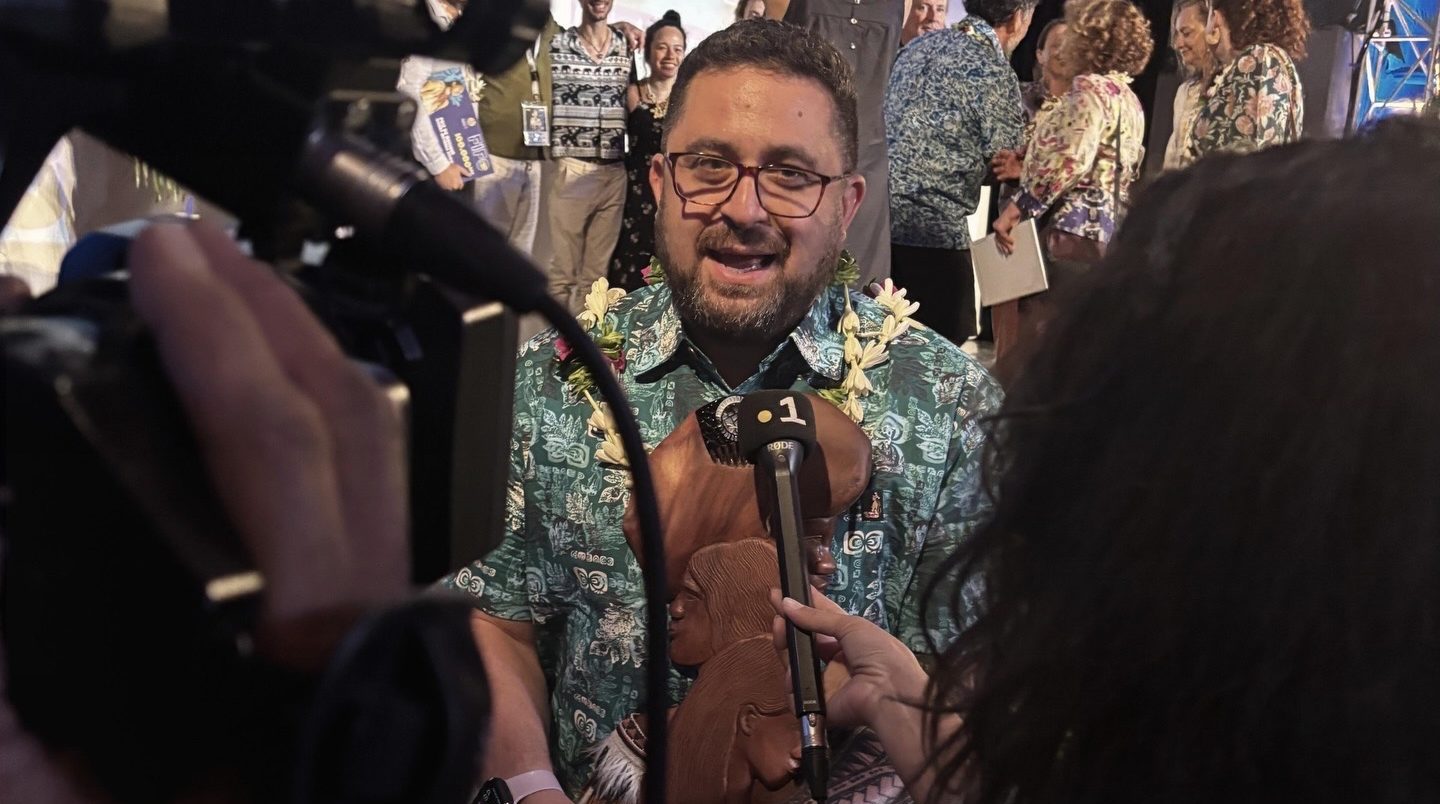
A documentary exposing the urgent issue of unexploded World War II bombs still killing and injuring people in the Solomon Islands has won a major award at the International Oceanian Documentary Film Festival in Tahiti.
The War Below: Restoring Hope in the Solomon Islands, directed by Sāmoan Bafta-nominated filmmaker Tuki Laumea, received the Prix Demain / ‘Ananahi (Special Prize for Tomorrow) at the 23rd edition of FIFO Tahiti.
More than 80 years after war took place in the Pacific, thousands of unexploded bombs remain buried across the Solomon Islands, beneath homes, schools and gardens.
Explosions continue to kill and injure people.
The film is a co-production between Aotearoa New Zealand based Nine Islands Media and Solomon Islands Local Media Agency, and is funded by NZ On Air through the Pacific Regional Media Fund in collaboration with Pacific Cooperation Broadcasting Limited (PCBL), which operates Pasifika TV.
It is co-produced by Tuki Laumea, Solomon Islands journalist Elizabeth Osifelo and Māori journalist and producer Cleo Fraser.
The 50-minute documentary centres on families living with that danger.
In one incident featured in the film, Lorettalyn Ale’s family were cooking crabs over an open fire when a buried World War II bomb detonated, killing her husband and young son and seriously injuring her and her teenage son Jeffry.
The film follows Lorettalyn, Jeffry and Maeverlyn Pitanoe, another survivor who is now building the country’s first victims’ support network through Bomb Free Solomon Islands.
Maeverlyn says she is moved by the support in Tahiti.
“When our stories are shared across the Pacific, it tells us that our suffering was not invisible and our voices matter,” she says.
“For many of us in the Solomon Islands, the war did not end decades ago.
“It is still buried in our land, and sometimes it rises and changes lives forever.
“Sharing our stories brings dignity to our pain and honours those we lost.”
Director Tuki is grateful to FIFO, France TV (who generously sponsor the award) and everyone who saw the film in Tahiti, he says.
“FIFO is an extraordinary event for the Pacific – celebrating our stories and encouraging the next generation of filmmakers,” Tuki adds.
“It is an honour for The War Below to be recognised, but what matters most is that it keeps attention on this issue and on the people living with the danger of unexploded WWII bombs.
“Up to 20 people are killed or injured by these bombs in the Solomon Islands each year.
“My focus in creating this film is to shine a light on this issue and help drive real change for survivors, while safeguarding future generations.”
Filmed entirely in the Solomon Islands by an all-Pacific crew, the documentary unfolds without narration, allowing survivors to speak directly about living with weapons left in the ground after the war.
Many viewers at FIFO Tahiti say they are unaware World War II bombs continue to kill and injure people in the Solomon Islands.
Audience members describe leaving the screening shocked and say the issue demands sustained regional and international action.
The idea for the documentary came from Elizabeth, drawing on her reporting on UXOs in the Solomon Islands through Tavuli News, which she co-owns.
“We want to know, whose mess is this? Whose war was it and who pays the price? “Telling this story…is important because survivors and victims need support,” Elizabeth says.
“Solomon Islands has tragically lost lives of loved ones, and we will continue to do so…it is important because we need more support.”
The filmmakers say the issue now requires coordinated international commitment to properly survey affected areas, fund sustained clearance operations, and support survivors and their families.
Tuki adds what is needed now, is sustained regional and international commitment to fully survey affected land and fund long-term clearance.
He has worked for decades in international journalism and filmmaking, including across Europe, Africa and the Middle East for Al Jazeera English.
In recent years he has focused on the Pacific, directing and producing award-winning historical and geopolitical films.
Donations can be made directly to survivors via Nine Islands Media.