
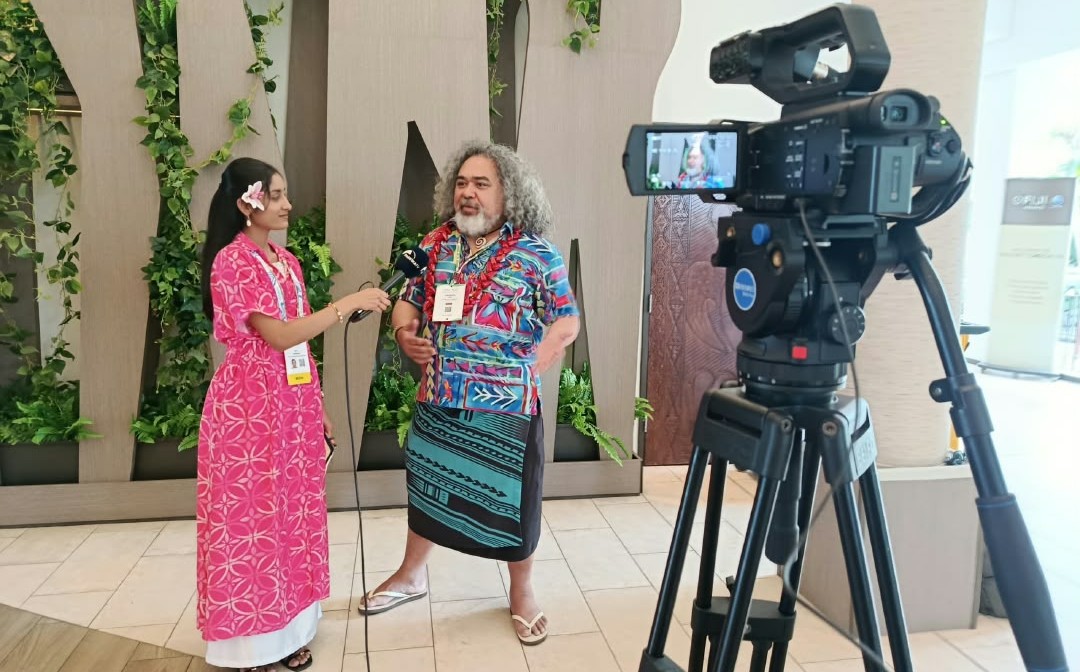
When it comes to climate change, the sure way to safeguard Pacific priorities remain part of the global conversation is to have a seat at the table says Fiji Broadcasting Corporation multimedia journalist Riya Bhagwan.
“The Pacific should not only be discussed through statistics and policy papers,” the 22-year-old adds.
“People from the region should be present to share their lived experiences and ensure Pacific priorities remain part of the global conversation.
“Having a Pacific voice there means we can help bridge that gap — bringing the global conversation back home and explaining what it means for the communities at the centre of the issue.”
Opportunity to be at the table
Riya is part of the Pacific cohort to attend the Pre-COP meeting in Fiji and Tuvalu, ahead of the UNFCCC 31st Conference of the Parties (COP31) in Antalya, Türkiye from November 9-20, 2026.
She joins four Pacific media professionals – including Papua New Guinea’s Varia Pekuku Omoa from EM TV and Wari Ila from National Broadcasting Corporation, and Solomon Islands Broadcasting Corporation reporter Alex Dadamu – to complete the Pacific Cooperation Broadcasting Limited (PCBL) and Secretariat of the Pacific Regional Environment Programme (SPREP) Pre-COP and COP31 Media Programme.
Under the guidance of Tia Soakai, Pasifika TV Regional Content Manager, the cohort collectively covered Pacific Climate Change Week, from September 28 to October 2 in Fiji, followed by Pre-COP31 from October 5-8, culminating in COP31.
Climate change confronting for Pacific communities
The Fiji-born journalist says it is the role of Pacific communicators to translate complex climate change discussions into language Pacific communities can understand and resonate with.
“Climate negotiations can involve highly technical language and issues that may seem far removed from everyday life,” Riya says.
“Climate change is a reality that Pacific communities have been living with for years, and Pacific countries contribute relatively little to global greenhouse gas emissions, yet they face significant consequences from a changing climate.
“For Fiji and other Pacific nations, climate change is not a distant or future issue – it affects communities, livelihoods, food security, infrastructure and the places people call home.”
Holding decision-makers accountable
Riya says as a Pacific journalist, attending Pre-COP31 and COP31 gives her the opportunity to better understand the discussions and negotiations taking place at these meetings, and then compare those discussions with what is actually happening on the ground in Pacific communities.
“This opportunity is about more than building myself professionally,” she says.
“Being there would also allow me to speak directly with climate experts, policymakers and other decision-makers, and ask the questions that Pacific communities want answered.
“It would give me an opportunity to hold decision-makers accountable for the commitments they make and to report back to Pacific audiences on what those discussions and decisions mean for them.”
Visit Pasifika TV’s website and social media platforms for Pre-COP and COP31 coverage.