
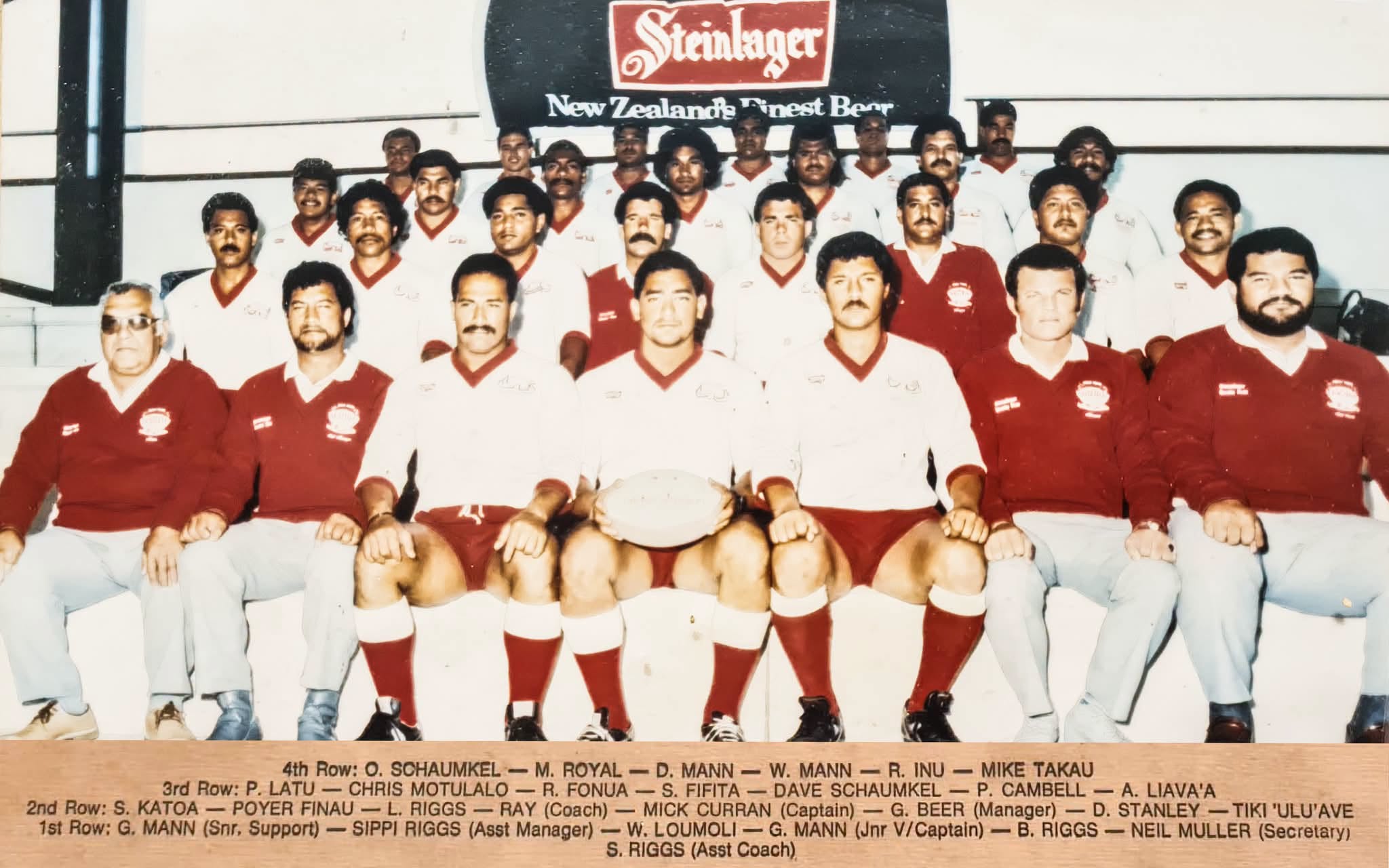
Four decades have passed since Mick Curran ran onto Rarotonga’s Tereora Stadium as captain of the inaugural Tonga National Rugby League team, but it feels like it was only yesterday for the 72-year-old.
Of Tongan and Irish heritage, Mick was selected to skipper the national team as it made its international debut in the 1986 Pacific Cup in the Cook Islands, where Tonga won two and lost two of its four matches.
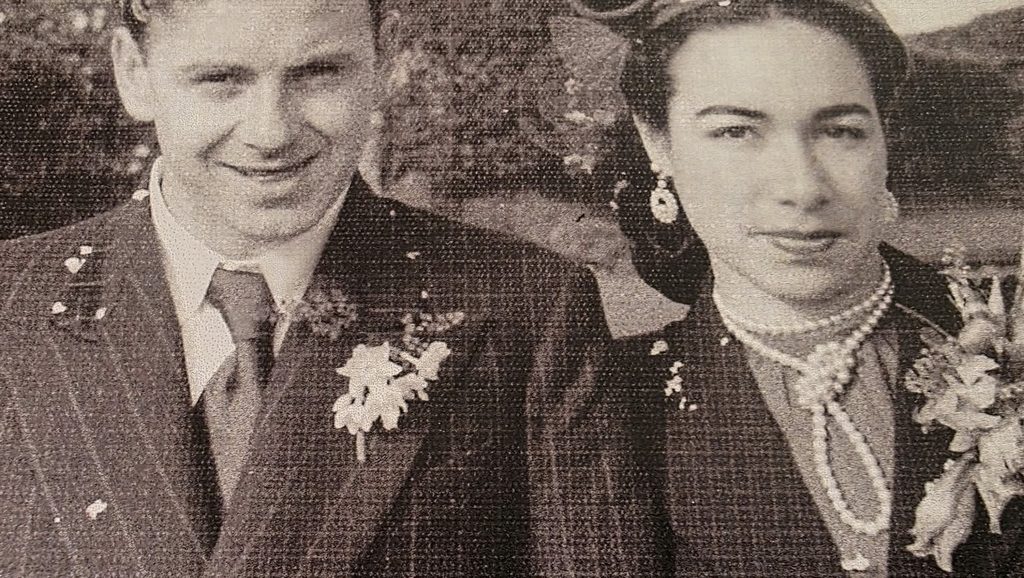
“I remember that first game against Samoa…all goosebumped…I had goosebumps all over, and I just felt so proud to represent Tonga and our family lineage,” Mick says, referring to his mother Lineti (nee Thompson), who hails from Ma’ufanga, Nuku’alofa.
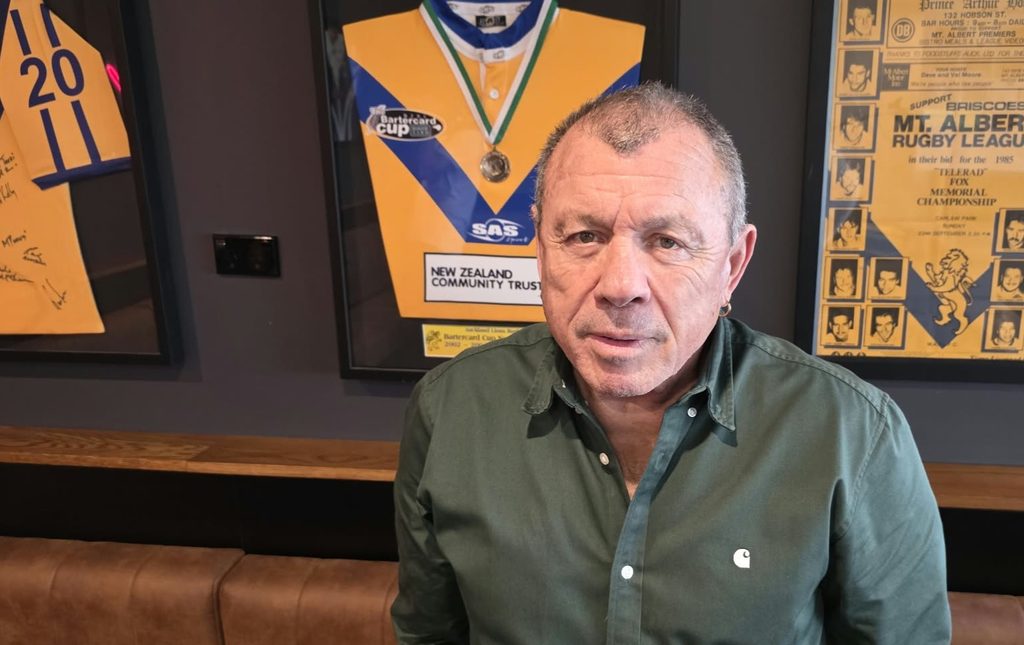
Rugby league has been a central part in Mick’s life since he took up the game as a youngster, kitting up for the closest club to his family home, Mount Albert Rugby League (MARL).
As the oldest of nine children, and his father James, a merchant seaman from Donegal, frequently away at sea, Mick found playing league was a way to escape his busy household and “keep out of trouble”, he says.
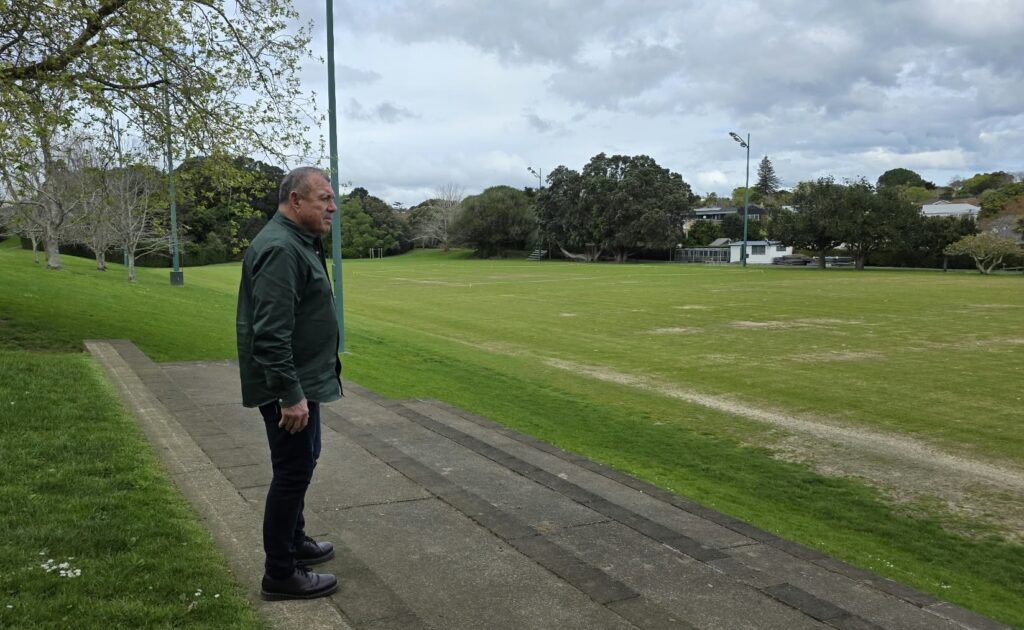
“I’ve been around Mt Albert Rugby League for a while, ever since I was about nine… I played rugby league here as a child, gave it away for a few years, came back at 18 and played till I was 33.
“I went to Marist Primary up the road (from the club) and I played rugby union there because that was what we played.
“Then I went to Marcellin College, and I got caned for not training with the First XV – I was only 14, they wanted me to play and train with them, but I refused, and I went to rugby league again…mainly because I got caned for not playing rugby.”
Mick, a life member of MARL, became a regular fixture at the club in between stints living and playing in Australia for Leeton and Wagga Magpies in the Riverina District, as well as representing Riverina and Northern Rivers District in the early 1980s.
The New South Wales-based club boasted a pipeline of tough country talent, and during his time there playing for an undefeated Leeton side, four players were signed by NRL clubs, he adds.
Back in New Zealand, the nuggety front rower was part of an exceptionally successful era at MARL, where he played in the victorious Fox Memorial championship sides of 1984, ‘85 and ’86, before returning to coach the MARL Premiers in the early ‘90s.
League and identity
It was on the back of the 1986 Fox Memorial Trophy win when Mick was approached by ex-Kiwi and coach of the inaugural Tonga team, Ray Williams, to captain the side to play in the Pacific Cup in the Cook Islands that same year.
“Back then, this is where all the Polynesians were playing rugby league – they were not playing in Aussie, they weren’t playing in the islands, they were playing here,” Mick says.
“All the teams got picked from here, Samoa, Tonga, New Zealand Māori of course, those three at least … I knew the coach as it turned out, Ray Williams, he was a great guy, dear friend of mine, he came up to me in the club here and said, ‘I want you to play, I want you to be the captain’, and I said, yeah, ‘I’ll play, I’m in, I love it, that’d be fantastic’.”
His mum Lineti was proud her eldest son had been selected to lead a side from her homeland, he adds.
“Mum was very proud…her Tongan side, she was very laid back, but she was very proud and very happy… there were nine kids, you know, and I am only one of nine.”
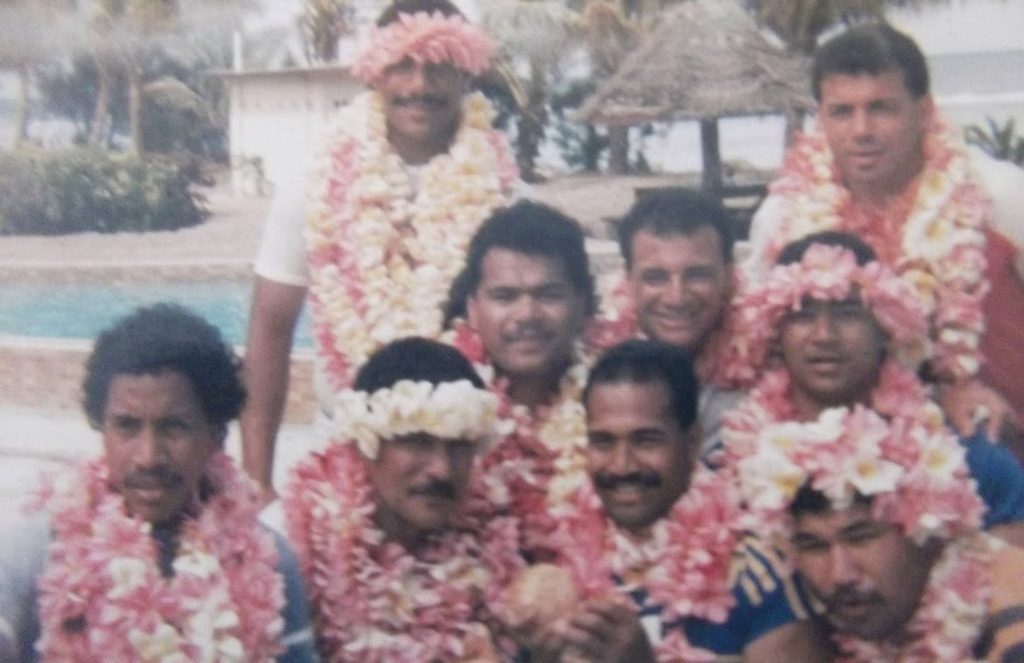
Renowned for being a powerful and fiery player, Mick recalls a memory with the Tonga side, ahead of the Pacific Cup kickoff.
“We were talking there before the games had started…all of us together, we had a meeting.
“One of our players said to me, ‘Oh, Mick, a couple of the boys visiting from Tonga want to talk to you’ and I said, ‘yeah, sure, what’s up, boys?’.
“They said ‘Oh, we don’t think you’re Tongan’, you know, because of my colour, right?
“And I go, ‘well, shall we just play football, and we’ll see then?’.
“We play and then afterwards, they give me a big hug and say, ‘you’re Tongan’,” he laughs, before adding the experience of playing for his mother’s homeland left him feeling more grounded in his Tongan identity.
“As a kid I was speaking Tongan, because we’d been to Tonga, one of my brothers was born there.
“The kids at school would laugh because I was speaking Tongan and couldn’t speak English – now I can’t speak Tongan.
“But playing for Tonga…it definitely connected me to my lineage and my mum.”
Pacific expansion
Rugby League is experiencing exponential growth throughout the region, with investment Australian-backed Pacific Rugby League Partnership involving Papua New Guinea, Tonga, Samoa and Fiji, boosting grassroots club and school competitions, right through to elite level footy, creating more opportunities for young players, coaches and officials than ever before.
The National Rugby League (NRL) reports over 50 per cent of its players have Pacific heritage, and in 2027, the competition will expand to include the PNG Chiefs, based out of Port Moresby.
Many Pacific players head to the Northern Hemisphere for the Super League season, in between representing their country of birth in international fixtures.
Mick says it is important to acknowledge the significant contribution Pacific players, past and present, have made and do make to the game.
“Pacific players – they are built for this game – it does not matter if you’re Tongan, Samoan, Māori, it doesn’t matter.
“There have been some great players over the years…but they were not that fit.
“The ones these days, man, they’re as good as any – our Pacific players, they’re built for rugby league,” before adding that high calibre players who balanced rugby league with day jobs, such as former Kiwi and Samoa representative Olsen Filipaina, would thrive under today’s professional climate.
With the 2026 Rugby League World Cup (RLWC) looming, it is significant to look at how Tonga has progressed since its first debut at a World Cup in 1996, he says.
“You only have to look at the players now and how much better they play, they’re in better condition, they’re more skilful…it’s another generation of players.”
He says it has been an honour to be part of the 1986 Tonga side, who has helped pave the way for today’s current crop of Pacific representatives, and the outlook for Pacific league is bright.
Four decades later
For Mick, rugby league has provided a sense of community, brotherhood, success and drive, as well as a link back to his Tonga culture, which was somewhat lost in the shifting dynamics of 1970s Auckland, and mindset of country-NSW.
From October 9-10, 2026, the legacy of Tonga rugby league and its future will be celebrated in the Mate Ma’a Tonga 40th Anniversary Celebration, at Trusts Stadium, in West Auckland.
While Mick’s two titanium knees will prevent him from venturing onto the paddock for the Mate Ma’a Tonga All Stars versus New Zealand All Stars anniversary match on October 9, his presence will undoubtedly be felt from the sideline as he cheers on some old teammates.
There are five matches scheduled that day, bringing together former internationals, current players, emerging talent, families and supporters to celebrate rugby league and culture.
The following evening, the Old Boys Association will host a special gala dinner to honour the Foundation Years (1986–1994).
Pasifika TV to screen RLWC2026
The RLWC2026 kicks off on October 15 and concludes November 15.
Digicel PNG has secured the exclusive broadcast and digital rights in the Pacific for the tournament and will screen matches to Tonga, PNG and Fiji.
With support from New Zealand’s Ministry of Foreign Affairs and Trade (MFAT), Pasifika TV will screen the men’s and women’s games to its affiliated broadcasters in other countries throughout the region.
For more information about match coverage, visit Pasifika TV or your local broadcaster.