By Michelle Curran
Executive Communications Manager, Pasifika TV/PCBL
With over half the Pacific’s population aged under 25, youth plays a unique and essential role across the region.
Initiatives such as the Pacific Youth Engagement, Empowerment and Economic Pathways (PYEEEP) project, co-designed by The Pacific Community (SPC), New Zealand’s Ministry of Foreign Affairs and Trade, Pacific governments, business, industry and youth representatives, provide a necessary platform to support youth to reach their potential.
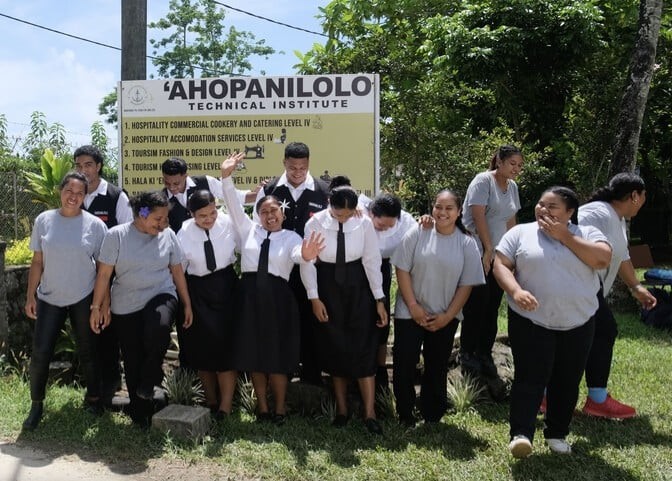
Showcased recently on SPC’s The Pacific Way, the project is impacting the region in a positive way, changing the life trajectory for young people in Tonga and the Solomon Islands – nations where PYEEEP was initially rolled out in July 2022.
Suva-based Social Inclusion Adviser and PYEEEP Project Manager in SPC’s Human Rights Division, Gabriella McMahon, says the initiative was created as a response to addressing low youth employment, and a way to improve education and training opportunities across the Pacific region.
“PYEEEP aims to not only improve employment and education opportunities for young people but to improve their social and economic wellbeing, their leadership skills, their self-confidence thereby improving their ability to contribute as citizens,” Gabriella says.
Established in 1947, SPC is a Council of Regional Organisations of the Pacific (CROP) agency which supports sustainable development in the region and is an advocate of PYEEEP due to evidence showing high rates of youth unemployment and early disengagement from education, Gabriella says.
“The project seeks to find solutions to these issues in innovative ways with holistic pathways that are contextualised to youth needs and labour demands,” she says.
“In addition to the training pathways offered, the project offers students training or support in human rights and social inclusion training, financial literacy, leadership skills training, work ethics training, first aid training, entrepreneurship training and support for childcare needs amongst others.
“These offerings are often built in response to needs raised by the students or project partners demonstrating the responsive and adaptive structure of the project, which is a significant strength.”
For the likes of 24-year-old Pritus from the Solomon Islands, PYEEEP has opened her eyes to a world of work opportunities.
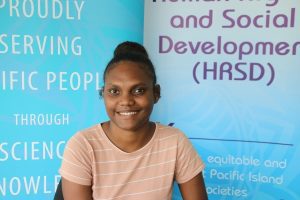
Three years after disengaging from education, Pritus applied and was selected to be part of the first cohort of PYEEEP and joined the hospitality and life skills pathway.
As part of this pathway, she attended a skills-based training at Mary Mazzarello Development Centre (MMDC), undertook an internship at the Heritage Park Hotel, a four-star hotel based in Honiara, and benefitted from other key elements in the project.
After the project, Pritus headed back to Malaita province, where she is from, and applied to work at a relative’s phone shop as a shop assistant, with the skills she gained on the PYEEEP pathway proving to be strong transferrable skills.
Pritus, who plans to go to university to do a three-year Diploma in Business Management, has ambitions to become an entrepreneur and sew clothes.
“The plan for me to go back to university because I have a goal that someday I would become a businesswoman or have a business with sewing,” Pritus says.
“I know how to sew and hope one day I have that dream come true.
“That’s why I have my plan to go back to school so that I have more knowledge and understanding about business.”
Pritus is among 75 percent of the first cohort who graduated from skills-based training pathways.
Gabriella says these young people are inspiring role models for the new students and are also living proof that projects such as PYEEEP, which support and empower Pacific people not engaged in education, employment or training (NEET), can have an invaluable impact, on young people’s work, life in general, and meaningful engagement in society.
“According to a recent evaluation of PYEEEP conducted by an independent evaluator, Alinea, the project ‘effectively improved the employability, confidence, and leadership of NEET youth,’ with many families also observing tangible contributions to household wellbeing.
“Wrap-around support proved decisive for completion transforming experiences of exclusion into a ‘second chance to dream’.”
As of January 2026, one cohort has completed the PYEEEP pathway in each country (Tonga and Solomon Islands) and another cohort is currently partway through.
A recent episode of The Pacific Way showcases the participants’ journeys – giving examples of how many have now secured ongoing work opportunities whilst some are pursuing further education.
“A number of students have commenced their own small businesses utilising the skills and knowledge gained through the project,” Gabriella says.
“These young people provide an essential voice as we continue to shape and strengthen the project design.”
Based on its success, other countries have expressed interest in implementing PYEEEP, and SPC is currently designing the next phase of the project based on the accomplishments and lessons learnt.
Pacific Cooperation Broadcasting Limited (PCBL) is proud to support SPC as a key CROP member as both organisations strive to support a prosperous Pacific, and the 2050 Strategy for the Blue Pacific Continent.