
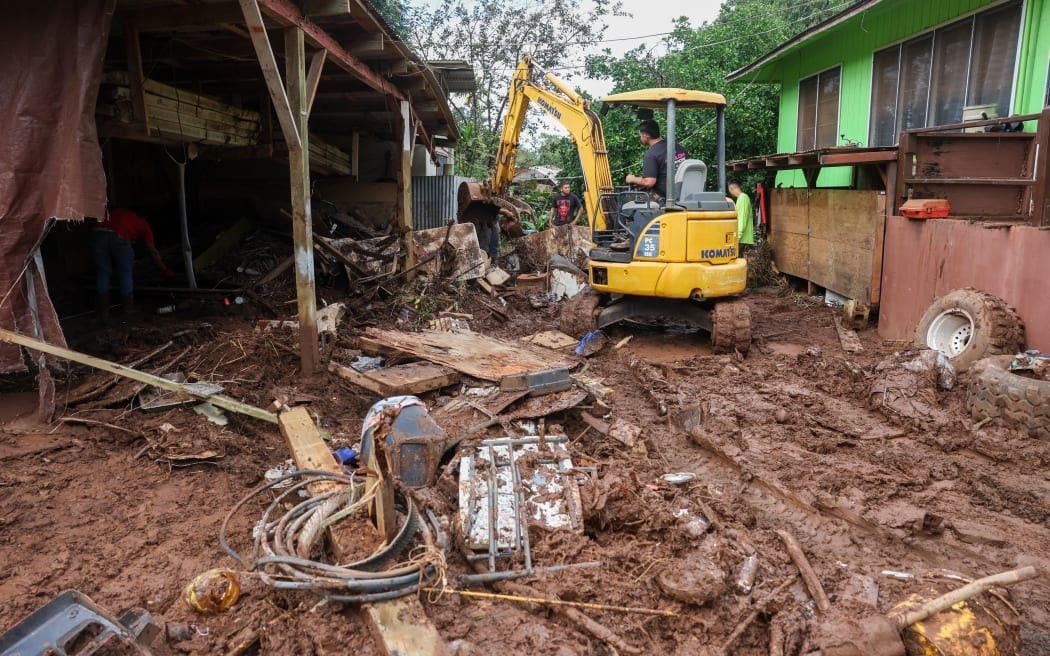
Source: RNZ Pacific
Communities in the North Shore in Oahu face a mountain of mud and debris to clean up following the devastating Kona Low storm flood in Hawaii last weekend.
The flooding has been described as the worst the state has experienced in 20 years.
Governor Josh Green said the damages could cost over US$1 billion, but the amount of devastation to farms is still being assessed.
Floodwaters damaged hundreds of homes, particularly in the Waialua and Hale’iewa residential areas.
Pastor John Boehm told Pacific Waves that with the water now receded, there is so much mud to get through.
“The kind of equipment that we [have] available, the heavy machinery, it could take maybe a week for some of the homes that were impacted with mud,” he said.
“One of my friends who lives in a low lying area next to a river – what I was told is that there is about six inches of mud and then another friend of friend said they had two feet of mud inside their home.”
Boehm said the flooding in the state has been “devastating”.
He said the community have come out in droves in response to what has happened, but the State Department and the City County have been silent.
Relief for farmers
The Hawaii Department of Agriculture and Biosecurity (DAB) announces the establishment of the Emergency Farmer Relief Program for farmers and ranchers statewide who were impacted by the recent storm systems – Kona Low 1 and Kona Low 2.
Farms, ranches and businesses may apply to receive a one-time grant of US$1500 to address immediate needs resulting from the storm.
A total of US$500,000 has been authorised for this emergency grant program from DAB restricted funds.