For many decades, United States funded initiatives such as the Young Pacific Leaders (YPL) program have played a pivotal role in fostering regional and global collaboration, building capacity in local communities, and addressing critical shared challenges around the world.
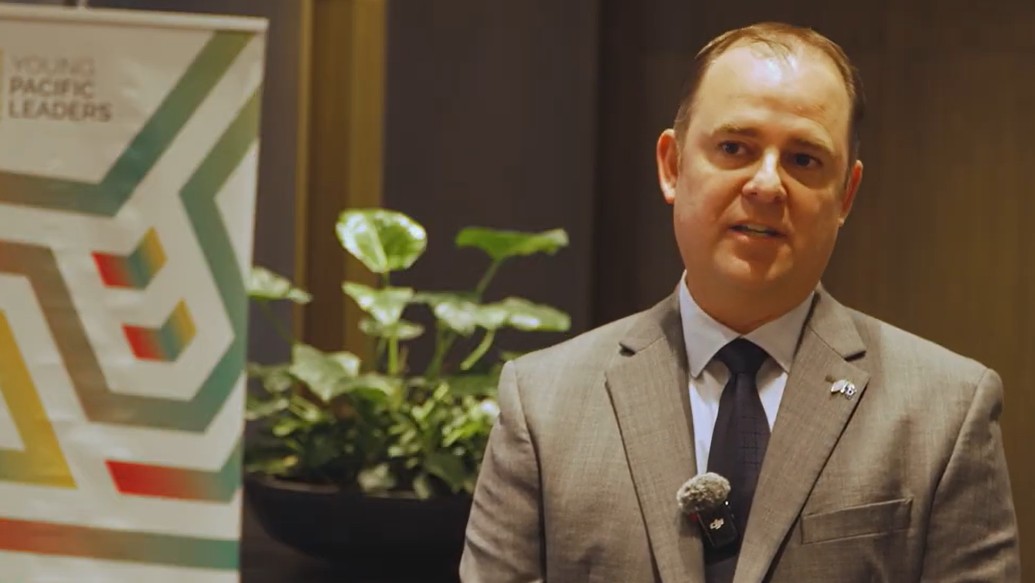
Getting a first-hand look at the impact US programs have on the Pacific recently, was Washington DC-based Christopher Schwab, Deputy Director, Office of Alumni Affairs, at the US Department of State.
Chris recently visited Auckland, New Zealand to attend the YPL Small Grants event for alumni, who were granted USD$10,000 earlier this year to work on projects designed to uplift their communities and create a safe, secure and prosperous Pacific region.
“They (YPL alumni) received small grants earlier this year…to work on projects within their own communities, things that are of interest to the US Government as well as to themselves and their communities,” Chris says.
At the event in Auckland, grant recipients presented results and the impact of their projects.
Beneficial exchanges
Alumni Affairs sits within the Bureau of Educational and Cultural Affairs at the US Department of State, and Chris explains the bureau works on exchange programs.
“These exchange programs have existed since the 1940s, and bring Americans around the world, but also bring foreign citizens to the United States, on professional and cultural topics, sports, and academic issues,” he says.
The real work for both alumni and the Alumni Affairs Office begins after the exchange has finished, when alumni return to their home country to achieve goals set and create positive change in their community.
“There are about 2.5 million alumni from around the world, including American citizens, which have gone on these programs over the years,” Chris says.
“Our office supports them with the next steps.”
As far as alumni go, the YPL cohort are very engaged, active and want to do more, he says.
“They’re always trying to find ways about what’s next for them and what’s next for their communities, and they really like to pay it forward to the next person, whatever it is they’ve been working on, they want to share that with somebody else.”
Pacific strength and unity
Chris says he is fortunate to have spent some time in the Pacific region, including Vanuatu last year, where he helped open the new US Embassy there, and also in Tonga, where he supported embassy staff there.
He is impressed at Pacific peoples’ sense of belonging and unity despite the vastness of the region.
“They share this common bond and this small, tight knit community.
“I sometimes will tell people back in the United States to think of a small Midwestern town – some of these communities are sort of like that, except they’re on an island.”
As a Pacific nation, the US is always looking at ways to engage and support the Pacific region, Chris says.
“We are celebrating next year, our 250th anniversary of the Declaration of Independence, and so we’re excited to look at ways that we can continue to work, with nations around the world on that and we’re hoping to engage alumni on these sorts of topics as well about their experiences on their programs.”
For Alumni Affairs, Chris says the exchange program is the start of its engagement with alumni in the Pacific and the world.
“We hope it’s a lifetime engagement – as alumni, there’s always opportunities in the future for small grants, to attend conferences and seminars on certain topics.
“We also hope they’ll continue to engage with the people they have met, so there are always opportunities to engage.”
Visit the Young Pacific Leaders website for more information about the US Department of State program.