
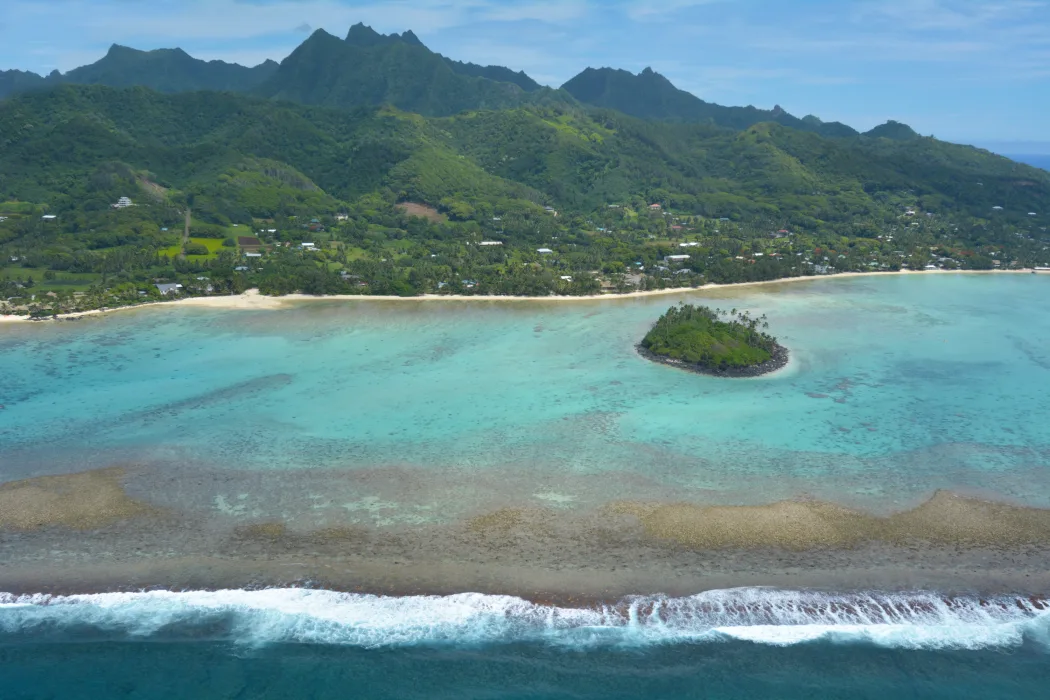
Source: RNZ Pacific
As the Cook Islands celebrates 60 years of self-governance, the nation is looking at how the backbone of its economy can move beyond just economic benefits.
Rarotonga is as popular as it has ever been.
Last year, the Cook Islands had more than 170,000, just shy of the all-time high in 2019, while the 2025 financial year recorded the greatest number of visitors ever.
While speaking to RNZ Pacific, Cook Islands Tourism CEO Karla Eggelton says the current year is on track to be even bigger.
“This is a really good time and opportunity to put a line in the sand and say, ‘we have now recovered, of the business getting back from the pandemic,’ and now we need to look at what the future looks like for the Cook Islands and tourism,” Karla says.
Tourism accounts for about 70 percent of the Cook Islands gross domestic product.
Former Prime Minister Henry Puna says one of his proudest moments over the past 60 years is the construction of the international airport under the first Prime Minister, Sir Albert Henry.
“The foresight of our founding father to build with the assistance of New Zealand the international airport, it was his dream that this was the gateway to prosperity, and so it has proven,” he says.
But more people means a bigger environmental toll.
Muri Beach Club Hotel general manager Liana Scott says it is common sense that it creates more waste.
“One of the nicest times that we experienced was covid, from an environmental perspective,” Liana says.
“Look the more numbers that are here of course there’s going to be more litter, there’s all sorts of effects on the environment.”
She says that, in 2019, it felt like the island was “bursting at the seams”, but lessons have been learned, and the island can now accommodate the same number of people.
“In 2019, you couldn’t get a rental car for your guest and tours were booked out, so the ability for those guests to enjoy some of the tours on the island was constrained.”
Turtle tours out of Avaavaroa Passage on the south side of the island is one activity that has seen a rapid growth in popularity.
Karla says turtle tour businesses have also grown, matching the interest.
“Our concern for safety, and compliance, and best practice in that area has also grown.”
The passage has notoriously strong currents and in 2023 a 50-year-old man from New Zealand drowned when he went out in the area without a guide.
Cook Islands Tourism has signed most operators onto a memorandum of understanding.
It includes safety rules, like one guide for every four guests and environmental guidelines such as maintaining a three-meter distance from turtles.
However, it is not a legal mandate, so it is up to the operators if they follow it or not.
Karla says visitor safety was paramount, and she wants measures implemented that operators must follow.
“There are no regulations that stop a Cook Islands business to operate within those waters and what we have seen along the way is Cook Islands tourism has no mandate.
“The authority to be able to manage that space belongs to other entities, and so we are working with those entities to find a solution that works for everybody.”
She adds the focus on tourism is shifting from economic benefits, to how the industry can help the wider community.
“Our community is telling us that they understand the role that tourism has to play economically but they are asking tourism to do more and play more of a role in the environment, in the community and the cultural space.”
More tourists also means a higher demand for short-term accommodation.
Liana says long-term accommodation is harder to find and it has changed the way she is hiring.
“At the moment it seems to be, you employ someone that knows someone, that knows someone, that they can stay with, over the best person for the job.”
Liana says the idea of capping tourist numbers had been thrown around, but it is not simple.
She believed measures can be put in place to manage growth, like requiring new accommodation to include built in accommodation for staff.
The lack of economic diversification from tourism was felt during Covid-19.
Cook Islands secretary of finance, Garth Henderson says it is not easy finding other ways to make money.
“We’ve known this forever, we know how vulnerable we are because of our dependency on tourism, we know that, but we have never had any money to do anything other than tourism,” he says.
“Diversifying the economy costs money.”
He also says the options are limited, with a lack of land for agriculture and the island’s remoteness.