By Michelle Curran
Strategic Communications, Pasifika TV
No stranger to crises, the Pacific has seen time and time again how a crisis not only demands coordination of a swift response, but also practical approaches to effective communication.
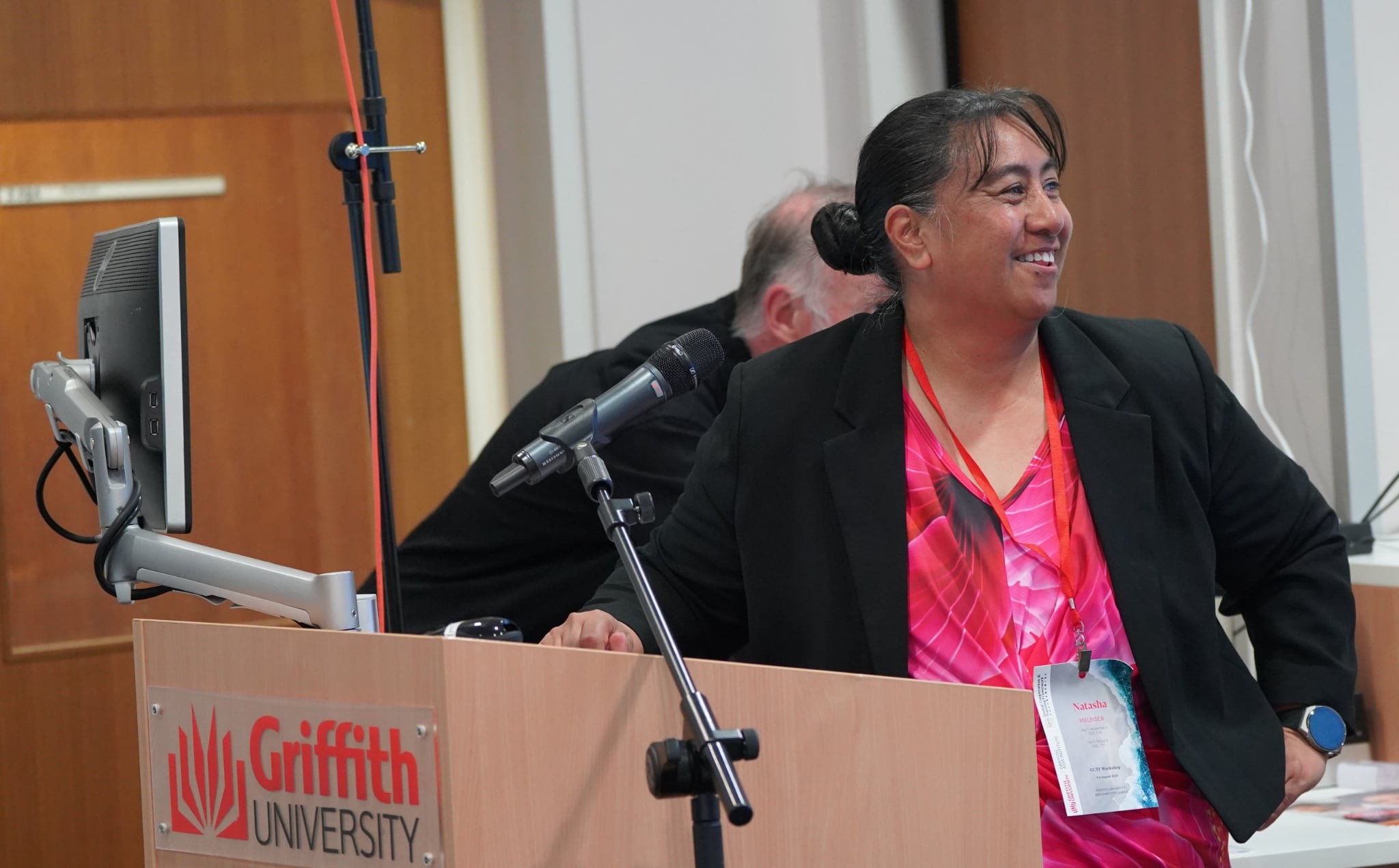
Pacific Cooperation Broadcasting Limited Chief Executive Officer Natasha Meleisea recently spoke to these needs in the region, at the Communication during a time of crisis: Practical approaches and lessons learned in the Pacific workshop, in Brisbane.
Staged under the Global Cooperation and Training Framework (GCTF) and hosted by Griffith Asia Institute and partners, the two-day event in early August saw regional experts, media professionals, and policy practitioners explore practical approaches to communication during times of crisis.
As well as strengthening DR communication across the Pacific, workshop sessions looked at a wide range of topics—from journalist safety and disinformation response to the role of technology and data transparency in crisis communication.
When asked to deliver a keynote address, Natasha shared how PCBL’s practical approach to communications during crisis times has been shaped and improved by the lessons learned across the Pacific region.
“The three events that made a significant contribution to shaping our own thinking of how we could support the communication needs for our Pacific broadcast partners during a crisis were; the COVID-19 pandemic; the catastrophic volcanic eruption of Hunga Tonga-Hunga Ha’apai, that triggered a tsunami in Tonga 2022; and most recently, the powerful earthquake that struck off the coast of Efate, Port Vila Vanuatu in 2024,” Natasha says.
“Among the main lessons we have learned, is that media is a lifeline in times of uncertainty and helps to build trust among communities.
“Coordination, consistency and a multi-platform approach is key to ensure information reaches the masses as is speed of disseminating the information.
“Not all communities are connected, and it remains an issue, so broadcast media is a lifeline – not only for communications but also for education and finally, having appropriate technology and support on the ground, is essential.”
After reflecting about the lessons learned from communications in times of crisis, Natasha says what stands out the most for her over and above the technology – is the spirit of Pacific people.
“It’s their ability to adapt, innovate, collaborate and bounce back,” she says.
“Communication is not just about broadcasting—it is about connection, building trust, and saving lives.
“Our people are key to strengthening our resilience.”
Looking forward, the workshop has reinforced the importance of regional collaboration and capacity-building in DR communication, and participants left with renewed commitment to strengthen networks, share tools, and continue the conversation across borders.