Source: SPREP
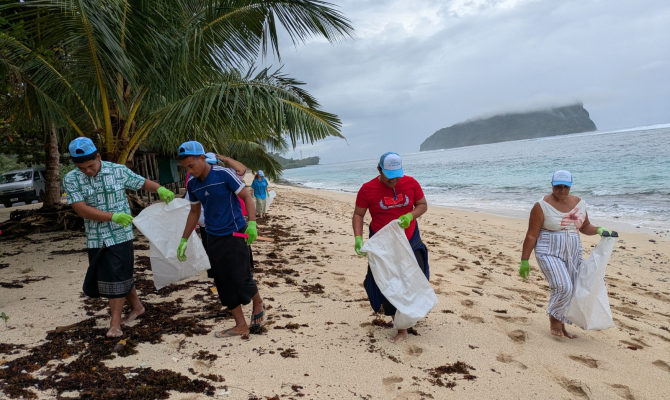
The Samoa Project Inception Workshop for the CleanSeas – Marine Litter Prevention in Pacific Island Countries initiative, supported by the Samoa Government and regional partners, is a significant step in the region’s collective effort to address the growing threat of marine litter.
Pacific Island Countries (PICs) are increasingly overwhelmed by solid waste.
Limited collection services and a lack of landfill space create severe disposal challenges, while a heavy reliance on imported goods exacerbates the problem by creating a non-reversible flow of materials into small countries with limited capacity to dispose of them.
Globally, up to 23 million tonnes of plastic pollute aquatic ecosystems annually, and this pollution threatens marine biodiversity, food security and human health, directly impacting the livelihoods of billions of people who rely on the ocean.
Bringing together national stakeholders involved in plastic waste production, waste management and recycling, the CleanSeas project is jointly implemented by Deutsche Gesellschaft für Internationale Zusammenarbeit (GIZ), SPREP and the Pacific Community (SPC), with support from the German Federal Ministry for the Environment.
It aims to strengthen frameworks for reducing single-use plastics and improving waste management systems across PICs.
Assistant Chief Executive Officer of Samoa’s Ministry of Natural Resources and Environment (MNRE) Fuimaono Katenia Rasch underscores the CleanSeas initiative is not a standalone endeavour but a strategic continuation of Samoa’s existing environmental stewardship.
“Our ocean sustains our food security, livelihoods, tourism and marine biodiversity,” she says.
“Protecting it begins on land, through the products we use and how we manage our waste.
“Samoa’s reliance on imports, limited disposal practices and access to recycling markets make practical, sustainable solutions essential.”
Fuimaono notes CleanSeas can support key national priorities, including the proposed Waste Levy as an Extended Producer Responsibility initiative, stronger compliance with single-use plastics controls, and improved collection and recycling.
“The experience of businesses, the tourism sector and recycling partners will help us identify workable solutions,” she adds.
Fuimaono also emphasises the project’s role in strengthening public awareness and expanding school education programmes on plastic pollution and responsible waste practices.
“Working with schools, village leaders, women’s committees, churches and young people, we aim to turn greater understanding into lasting action, supported by practical options for reducing, reusing and recycling waste,” she says.
She says the Ministry is already implementing projects to reduce plastic use and strengthen controls on plastic pollution, so it important the Ministry and stakeholders carefully assess priorities for CleanSeas to avoid duplication, address gaps and build on existing effort.”
The workshop aims to catalyse coordinated action across government, civil society and the private sector.
By aligning with the Pacific Regional Action Plan on Marine Litter and the Cleaner Pacific Strategy 2050, the project will help Samoa implement ambitious environmental frameworks.
These efforts will reduce single-use plastics, build waste management capacity and drive behaviour change campaigns.
Ultimately, the CleanSeas project seeks to protect marine biodiversity and safeguard Samoa’s ecosystems and future generations.