
Source: RNZ Pacific
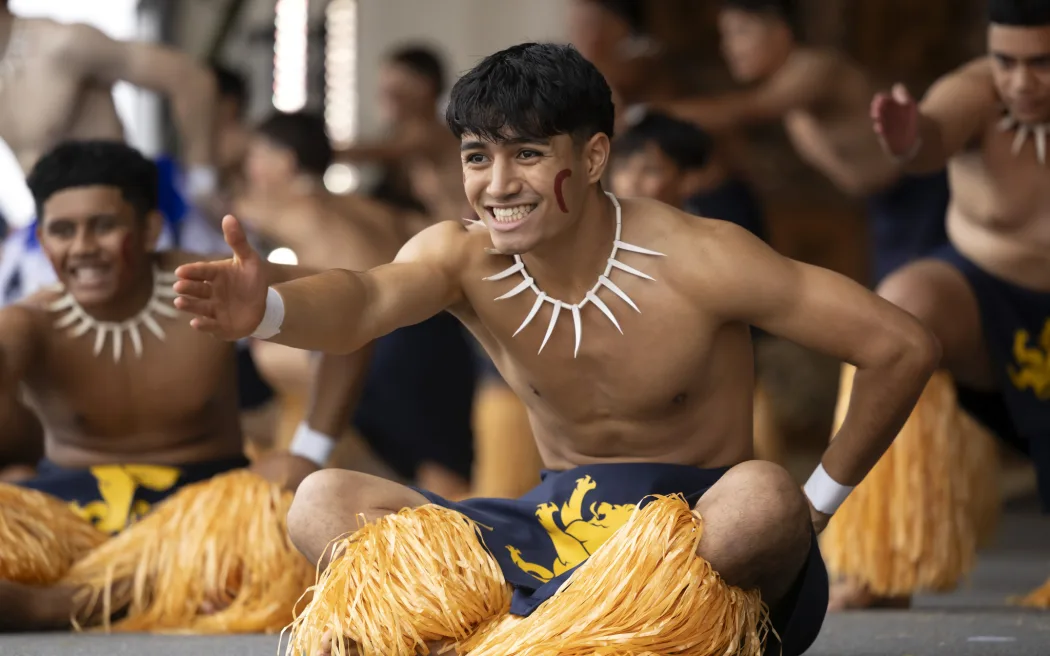
The world’s largest secondary school cultural festival, Polyfest returns this week to Tamaki Makaurau.
For the first time the event will be held across two locations.
ASB Polyfest officially launches today (Wednesday), starting with a flag raising ceremony at Manukau Sports Bowl.
The venue transforms into a cultural hub with five stages featuring the Cook Islands, Niue, Samoa and Tonga, as well as a stage dedicated to Diversity.
Attendees can watch cultural performances on the Pacific and Diversity stages as well as speech competitions up until Saturday.
Meanwhile, Manukau’s Due Drop Event Centre will host the Māori stage with performances scheduled from March 30 – April 2, reflecting the growing importance of this Polynesian cultural festival.
This year marks 51 years of Polyfest with the theme, ‘Ko au ko te Taiao! Ko te Taiao ko au! He Toa Taiao Taiohi no te Moana nui a Kiwa, ake, ake, ake! – The environment lives in me, as I live in it – a Pacific Youth Eco-Warrior for generations to come.
More than 80,000 people are expected to attend and while the event mainly showcases Pacific youth performances, organisers say it is a celebration of New Zealand’s diverse communities.
Speaking to Pacific Waves, the festival’s director Seiuli Terri Leo-Mauu said 263 groups from 73 schools had registered to perform this year.
Behind the scenes, Seiuli said there were many volunteers and “unspoken heroes” that ensure the event is run smoothly.
“Within the stage areas alone, with six stages there’s probably over just 100 people that are working within the stage areas,” Seiuli said.
“Organising it from last year, April to this year March, there’s a core team of seven that then grows into a team of 20 or 30.
“And then, on the ground with all our volunteers and all our contractors, there’s about 2000 then there’s about two or 3000 coming from the schools alone,” she said.
Seiuli explained the splitting of the event with the Maori stage held at another location and time is due to the festival’s expansion and growth.
The subsequent schedule is also timed to complement Te Matatini, which is usually held every two years in February, allowing schools to have more time to practice for Polyfest.
In the lead up to Polyfest’s 50th anniversary, the event’s financial woes made news headlines with organisers scaling back the festival and blaming government for not increasing its funding.
Seiuli said securing long-term funding was still a “work in progress”.
“We worked with a contractor with some funding that the Ministry for Pacific Peoples provided for us to work on a funding strategy and funding model that still needs to be delivered,” Seiuli said.
She added that funders had emerged for 2027 and 2028 with several new stage sponsors on board.
Having directed the festival for the past 17 years, Seiuli said the festival had become about more than just the main four-day event.
The Leaders Conference held over two days at the start of the year also brings together cultural school leaders across Auckland and beyond giving them the opportunity to connect and also immerse themselves in the various workshops provided.
With the weather forecast looking clear over the next few days Seiuli said there had been no need for a wet weather contingency plan.
She said performances will continue on as scheduled and but families should still bring their umbrellas and gumboots, just in case.
You can find out more information about ASB Polyfest 2026 here.