
By Michelle Curran
Executive Communications Manager, Pasifika TV/PCBL
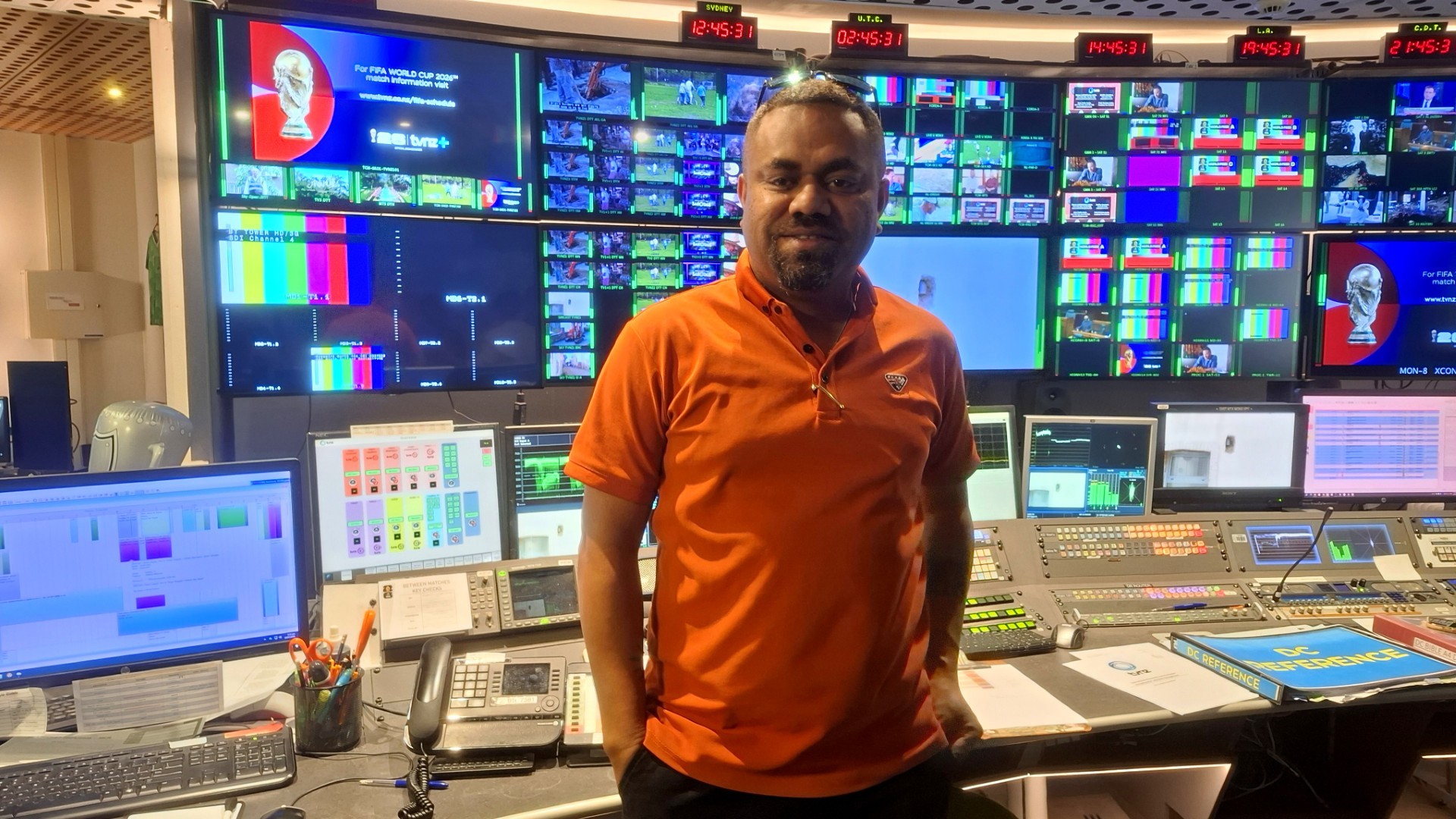
A combination nerves and excitement are brewing for Jone Tomuse, as he prepares to deliver Pacific-specific content from the 2026 Commonwealth Games in Glasgow, to the region via Pasifika TV over an intense 10-day window.
The 34-year-old Mai TV (Fiji) Manager TV Content and Production is part of a Pacific cohort, invited to Aotearoa New Zealand to produce content from the Games taking place from July 23-August 2.
Supported by the Ministry of Foreign Affairs and Trade (MFAT), Pacific Cooperation Broadcasting Limited (PCBL) has partnered with Sky TV to air coverage of the Games, as well as train the four Pacific media professionals alongside the Auckland-based Sky team.
Jone has joined Katokakala Lino, visual editor at Tonga Broadcasting Commission, Papua New Guinea’s Wari Ila, senior video editor at National Broadcasting Corporation, and Meli Ma’afu Fanua Laddpeter, sports journalist at Fiji Broadcasting Corporation to prepare for the project.
Over the next two weeks, the cohort will gather stories, as well as produce daily highlights, focused on Pacific athletes competing in Scotland.
Overseeing the training is Paul Vunituraga, a Pacific-based broadcast manager, producer and consultant, PCBL Regional Content Manager Tia Soakai, and PCBL General Manager Programming and Sport Tui McKendrick.
It is not Jone’s first stint working on international projects, having directed the 2024 Commonwealth Heads of Government Meeting (CHOGM) opening ceremony, in Samoa, as well as filming/editing at COP28 in Dubai as a camera operator and editor.
Passion for Pacific storytelling
Passionate about Pacific storytelling, Jone says he is excited and honoured to be part of this project.
“There are always some nerves when working on an international sporting event of this scale, but those nerves are outweighed by the excitement of learning from experienced sports broadcasters and representing Fiji and the Pacific on such an important platform,” Jone adds.
“I wanted to be part of this project because it is a rare opportunity to develop specialist sports broadcasting skills while helping showcase Pacific athletes to audiences across the region.
“Our athletes have inspiring stories that deserve to be told, and I am proud to contribute to sharing those stories.”
Projects such as this one, which encourage and incorporate capability building are essential for Pacific media, with rapidly evolving technologies, digital platforms, and changing audience expectations, Jone says.
“Pacific media organisations often face resource and training challenges, so opportunities like this help us build the skills needed to remain competitive while protecting our own storytelling and ensuring Pacific stories continue to be told accurately, authentically, and from a Pacific perspective.
“I believe this experience will help create a stronger network of skilled Pacific sports journalists and producers.
“Together, we can produce more professional, high-quality sports content while ensuring Pacific stories are told by Pacific voices.
“This will help inspire the next generation of journalists and strengthen sports media across the region.”
Inspiring the next generation of Pacific sports broadcasters
Committed to mentoring emerging media professionals and strengthening the region’s broadcast industry through leadership, collaboration, and innovation, Jone aims to return to Fiji with new ideas, production techniques, and best practices to strengthen Mai TV’s sports coverage.
“I hope to strengthen my skills in sports production, storytelling, and live event broadcasting…and build strong professional relationships with broadcasters across the Pacific and New Zealand which may lead to future collaborations and improve sports coverage in our region,” he says.
“I also want to share what I learn with my colleagues, helping build a stronger production team capable of delivering high-quality coverage of both local and international sporting events.”
Approximately 3000 athletes from 74 nations and territories will be competing in 10 sports, across four venues at the upcoming Commonwealth Games, in Glasgow.
Pacific countries sending athletes to this year’s event include Cook Islands, Fiji, Kiribati, Nauru, New Zealand, Niue, Papua New Guinea, Samoa, Solomon Islands, Tonga, Tuvalu, and Vanuatu.
To view the Commonwealth Games in the region, visit Pasifika TV or your local broadcaster.