
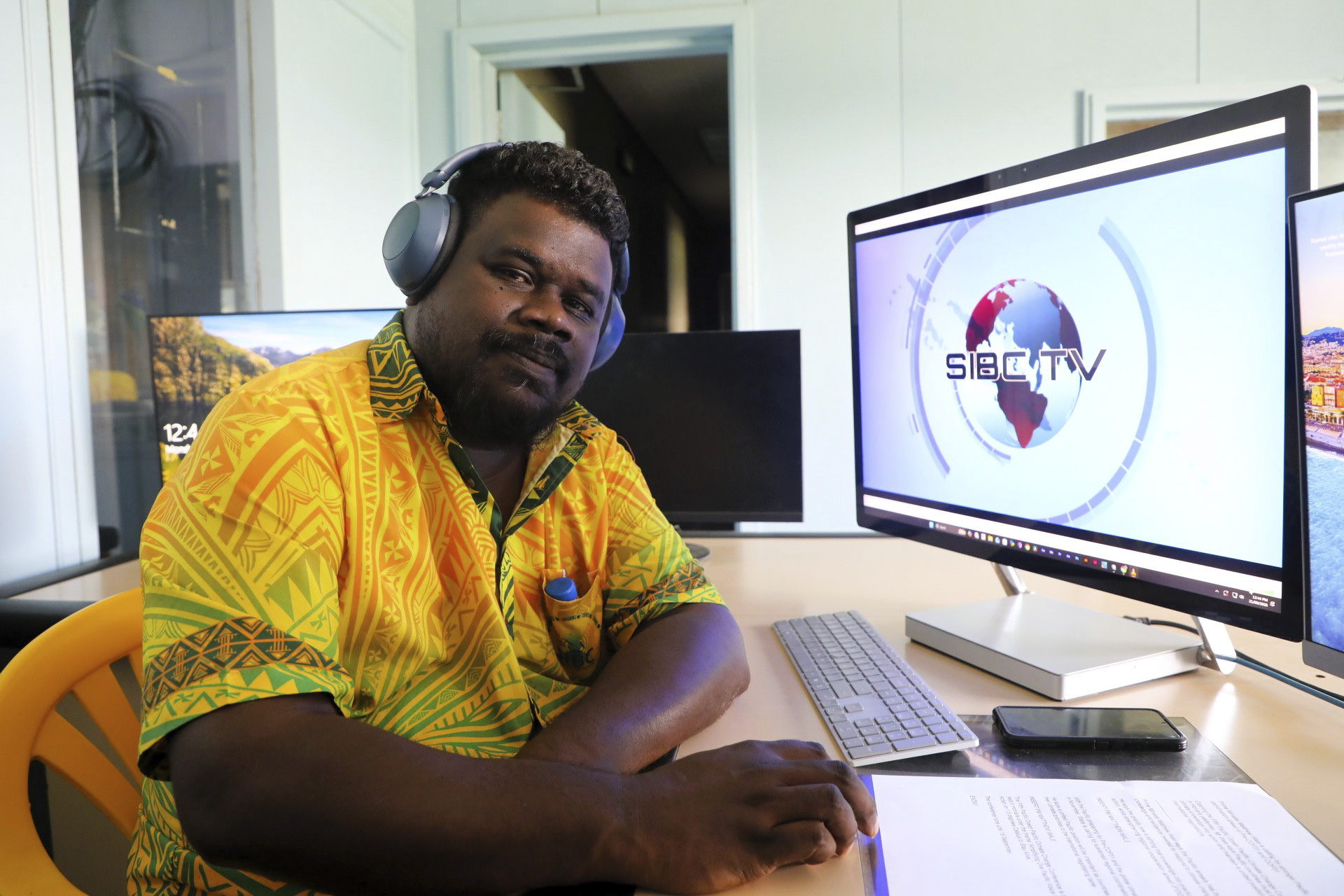
For Solomon Islands journalist Alex Dadamu and his countrymen and women, climate change is not just about figures or negotiations for Pacific people.
“It is about our homes, our islands, our oceans, our food, our livelihoods and our way of life,” says the 33-year-old TV reporter for Solomon Islands Broadcasting Corporation (SIBC).
With connections to the Western and Malaita Provinces, and parents who were both teachers Alex moved around a lot growing up.
“I mostly grew up in a rural setting during the 1990s, where life was quite simple,” he says.
“Living in rural communities gave me a strong connection to village life, the land, and the ocean, and I think that background also influences the way I see journalism today.
“I understand that many of the issues discussed at the national and international level can sometimes feel very distant from people in rural communities and I want to help connect those big issues to the everyday experiences of ordinary people.”
Pre-COP and COP31 Media Programme
With this in mind, Alex successfully applied to attend and report on the Pre-COP meeting in Fiji and Tuvalu, ahead of the UNFCCC 31st Conference of the Parties (COP31) in Antalya, Türkiye from November 9-20, 2026.
Alex is one of four Pacific media professionals (two journalists and two editors) selected to be part of the Pacific Cooperation Broadcasting Limited (PCBL) and Secretariat of the Pacific Regional Environment Programme (SPREP) Pre-COP and COP31 Media Programme.
Led by Tia Soakai, Pasifika TV Regional Content Manager, the team consists of Alex, Riya Bhagwan from Fiji Broadcasting Corporation, Wari Ila from National Broadcasting Corporation of Papua New Guinea and EMTV’s Varia Omoa, also of PNG, who will collectively cover Pacific Climate Change Week, from September 28 to October 2 in Fiji, followed by Pre-COP31 from October 5-8, culminating in COP31.
The team has comes together in Fiji after weeks of training, interviews and preparation, facilitated by SPREP and supported by PCBL, with the aim to enhance climate change reporting by Pacific people, and encouraging them to tell their own stories about how it impacts their communities.
Alex says climate change is an issue already affecting Pacific communities, oceans, food security, livelihoods, and the future of our children in the region.
“As a journalist, I see this as an opportunity to better understand what is being discussed and negotiated at Pre-COP and COP31, and then bring relevant and clear information back to our people.
“I want to better understand how the COP process works, what countries are negotiating, and what decisions made at these meetings actually mean for Pacific countries like Solomon Islands and I am particularly interested in learning more about climate finance, the 1.5-degree target, the connection between the ocean and climate change, and support available to communities already experiencing the impacts of climate change.”
Network expansion
While at Pre-COP and COP31, Alex has goals of extending his network with fellow Pacific journalists, as well as climate experts, leaders, and organisations, he says.
“Those connections can help strengthen climate reporting in Solomon Islands and the Pacific,” he says.
“Most importantly, I want to bring back stories that connect the international discussions at COP31 with what is happening in our communities at home.
“The Pacific is one of the regions that is experiencing the impacts of climate change very directly, even though Pacific countries contribute very little to global emissions.
“That is why Pacific voices need to be present – we need to be able to share our experiences, put forward our priorities and make sure that decisions being made at the global level reflect the realities of people living on the frontline of climate change.”
Making stories personal and relatable
For people in the community to fully grasp the concepts he will be reporting on, Alex says the key is to make stories about climate change personal and relatable.
“If you talk to someone in a remote village about COP31 using only technical terms and international negotiations, they may feel that it has nothing to do with them,” he says.
“But if you explain how those discussions connect to things, they already experience — changes in weather, coastal erosion, damage to gardens, declining fish stocks, water shortages or the future of their children — then it becomes much more relevant.
“I want people in the villages to understand that the decisions being discussed internationally can have a connection to their everyday lives.
“And I also want to show that Pacific communities are not only victims of climate change — they have knowledge, solutions, and experiences that the rest of the world can learn from.”
Visit Pasifika TV, the website and social media platforms for Pre-COP and COP31 coverage.